
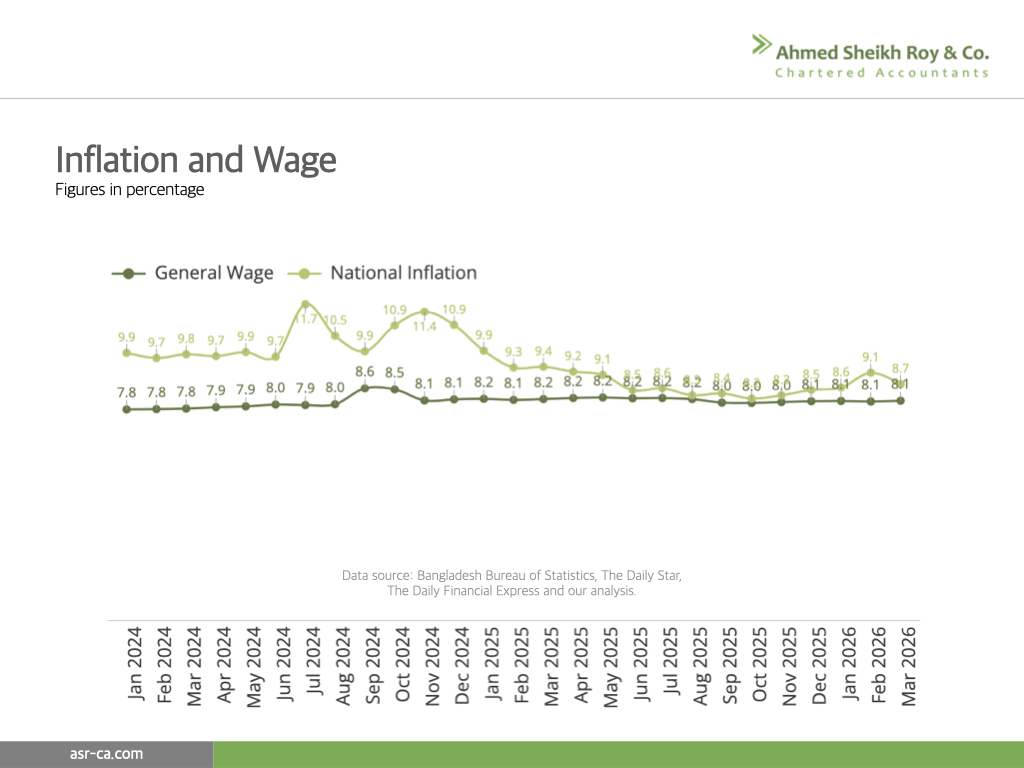
Inflation eased to 8.71 percent in March, offering slight relief to consumers, but analysts warn that prices may remain sticky in the coming months as the US-Israel war on Iran drives up costs and disrupts supply chains, reported The Daily Star.
Food price inflation fell to 8.24 percent from 9.3 percent the previous month, according to data released yesterday by the Bangladesh Bureau of Statistics. Non-food inflation, however, edged up to 9.09 percent from 9.01 percent in February.
The moderation follows a spike to 9.13 percent in February, a ten-month high, when higher food prices ahead of Ramadan and increased election-related spending fuelled demand, pushing the Consumer Price Index.
The Financial Express reported on 6 April, a resurgence in funnelling reserve money into the market through cheap state credits to banks and dollar buy from them through regulatory intervention is stoking fears of higher inflationary regime ahead.
Under a persistently tight monetary-policy regime espoused by the central bank to contain growing inflation, the inflow of the inflation-fuelling reserve money dropped to a negative growth of 0.12 per cent even in June last. Since then, in a rebound, it has risen significantly in recent months, which money-market analysts believe largely contribute to the upward trajectory of inflation over the last several months.
Point to point wage rate index raised a little in March to 8.09 from 8.06 of February. The average wage index was 8.1 in 2024-25. The wage rate index should exceed inflation rate to maintain cost of living conditions as it was.
The moving average inflation since beginning of the current fiscal year to March was 8.49, whereas the wage index was 8.14. Meaning, in general, people of the country become 0.35 points poorer that the same period in the last year.


